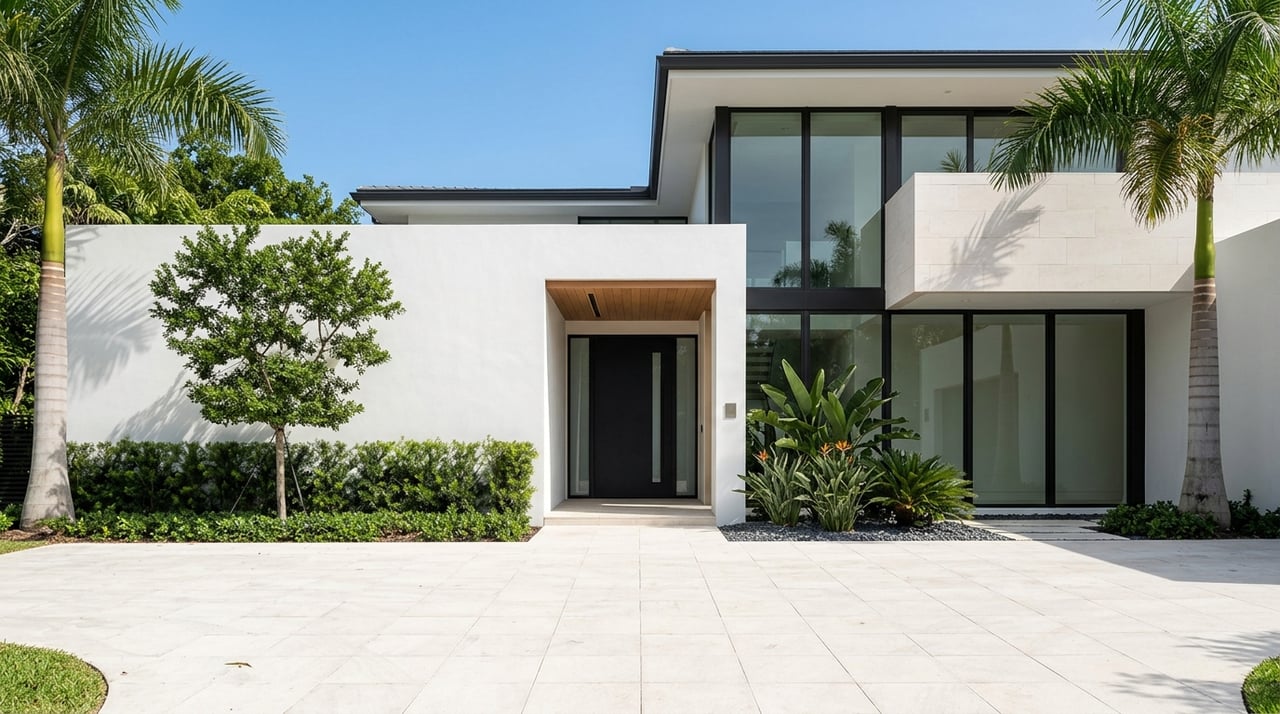
Shopping for a waterfront home in Gables Estates is not like shopping any other luxury neighborhood in Miami-Dade. This is a small, guard-gated enclave in Coral Gables where inventory is limited, pricing sits firmly in the ultra-luxury tier, and ownership comes with club membership and layered approval standards. If you are starting your search, it helps to know what truly drives value here so you can compare properties with confidence. Let’s dive in.
Why Gables Estates Stands Apart
Gables Estates is a private waterfront enclave in Coral Gables developed in the early 1960s by Arthur Vining Davis. According to the Gables Estates Club, the community includes 192 lots across more than 200 acres of Coral Gables shoreline and is built around wide, deep-water, sea-walled canals.
This is also a highly controlled ownership environment. The club states that purchasing property requires membership in Gables Estates Club, and the neighborhood operates with 24-hour armed guards at both entrances, patrol cars, boat patrols, monitored cameras, and off-duty Coral Gables Police patrols. For many buyers, that combination of privacy, waterfront access, and regulated entry is a major part of the appeal.
Understand the Price Tier First
Before you compare finishes or dock lines, it is important to understand where Gables Estates sits in the broader market. Realtor.com currently shows active listings ranging from $14.9 million to $175 million, with recent sales including 10 Casuarina Concourse at $27 million and 41 Arvida Parkway at $50 million in October 2025.
That pricing places every active listing well above Miami-Dade’s late-2025 luxury thresholds identified by MIAMI REALTORS®, where single-family luxury begins at $3.5 million and ultra-luxury begins at $10 million. In practical terms, you are not entering a typical waterfront search here. You are entering a very small estate market where each property can trade on highly specific characteristics.
Compared with nearby alternatives, Gables Estates occupies a distinctly different lane. Realtor.com market data for nearby areas shows Cocoplum, Old Cutler, Key Biscayne, and Fisher Island at meaningfully lower pricing benchmarks or different ownership formats, which reinforces that Gables Estates is its own category rather than a simple substitute for other waterfront options.
Compare Lots, Not Just Asking Prices
One of the biggest mistakes early-stage buyers can make is assuming all waterfront homes in Gables Estates offer a similar boating or privacy experience. They do not. The neighborhood is unified by its waterfront identity, but individual parcel geometry varies quite a bit.
For example, current and recent marketing details show major differences in frontage, lot size, and dock potential. A property like 140 Arvida Parkway has been described with 200 feet of direct Biscayne Bay frontage plus 200 feet of seawall on a protected waterway, while 555 Arvida reports 180 feet of frontage and a 100-foot dock with boat lift. Other listings show over 2 acres and 335 feet of waterfront, while some sites are closer to 1 acre with around 152 feet of frontage.
That is why headline price alone tells you very little. In this neighborhood, value often comes down to exact waterfront type, frontage width, turning radius, seawall condition, privacy, and how usable the dock setup is for your boating needs.
Focus on Boating Access Details
If boating is part of your lifestyle, your due diligence needs to go deeper than “waterfront” and “ocean access.” The club’s description emphasizes wide, deep-water, sea-walled canals, but listings show that access conditions differ from lot to lot.
Some homes are bayfront, while others are positioned on protected waterways. Some listings specifically note no fixed bridges and ocean access, which can be especially important if you own or plan to own a larger vessel. Others may be more attractive for protected dockage, even if the experience differs from direct bay frontage.
A smart waterfront review should include questions like:
- Is the parcel fixed-bridge free?
- What type of waterfront does the property have?
- How much usable frontage is there?
- What is the dock length and current setup?
- Has the seawall condition been evaluated?
- Does the lot support the boating configuration you want today and later?
These details matter because two homes at similar price points can deliver very different day-to-day waterfront use.
Expect a Regulated Ownership Process
Gables Estates is not a standard HOA purchase. According to the club’s disclosure summary, a purchaser is obligated to join Gables Estates Club, assessments are required and may change over time, and unpaid assessments can result in a lien.
The club by-laws add another layer. Membership application fees and annual dues are set by the Board of Governors, and the application process includes approval by the Admissions Committee or Board along with character, financial-status, and business or personal reference checks.
The by-laws also state that tenants and other occupants must apply for membership and be approved. That means the approval structure affects not only ownership, but occupancy as well. If flexibility is important to you, this is something to understand early in the process.
Budget for Carrying Costs
At this price point, buyers are usually focused on acquisition cost, but recurring costs deserve equal attention. Current listings indicate annual HOA fees in roughly the $7,500 to $8,500 range, and the club documents explain that annual maintenance fees can support items such as street lighting, storm-water drains, garbage collection, and security-related staffing.
You will also want to review parcel-specific carrying costs that are common to waterfront ownership. Those may include insurance, flood-related considerations, dock or seawall maintenance, and future capital needs depending on the condition of the property. In a market like Gables Estates, those line items can materially shape the real cost of ownership.
Know the Renovation Rules Before You Buy
A finished home may still need work to fit your lifestyle, but in Gables Estates, planned changes should be evaluated before you close. The neighborhood’s Architectural Review Board guidelines state that projects are reviewed in two phases, preliminary and final, and proposed work must be submitted to the ARB before city submission.
The review package can include surveys, elevations, landscape and drainage plans, dock and davit locations, and contractor registration requirements for gate or office access. Construction hours are limited, and weekend or holiday work requires written neighbor consent plus board approval.
This matters because a property that looks like a simple cosmetic update on paper may involve a longer and more structured approval path in reality. If you are buying with the intention to remodel, expand, or adjust dock infrastructure, you should build extra time into your planning.
Consider Coral Gables Design Review
Your buying experience in Gables Estates is also shaped by the broader design culture of Coral Gables. The city’s Board of Architects exists to preserve traditional aesthetics and reviews elements such as color, materials, fenestration, and proportion.
At the same time, current listings in Gables Estates show a mix of architectural styles, including modern tropical estates and Mediterranean-modern hybrids. That combination tells you something important: you may see stylistic variety, but changes still sit within a city and neighborhood context that values design discipline and formal review.
Prepare for a Longer Timeline
Even when a home is completed and move-in ready, this is still a custom market. Fewer properties trade, buyer criteria can be highly specific, and approval and due diligence tend to be more involved than in conventional neighborhoods.
Recent history supports that point. A property at 140 Arvida Parkway spent 208 days on market before closing in 2023, according to Compass listing history. That does not mean every purchase will take that long, but it does suggest you should approach the process with patience and a detailed plan.
Review Flood and Site Conditions Carefully
Because this is a waterfront neighborhood, flood and insurance review should happen at the parcel level, not just the neighborhood level. Listing information for 140 Arvida Parkway, for example, shows AE and VE flood zones, which is a reminder that exposure can vary even within the same enclave.
That is why serious buyers should confirm flood-zone information, insurance implications, seawall condition, and dock infrastructure for the exact property under contract. In a market defined by custom lots and waterfront nuance, site-specific diligence often matters as much as the address itself.
What Smart Buyers Prioritize
If you are narrowing your shortlist, keep your evaluation centered on the issues that most directly affect long-term fit and ownership experience:
- Waterfront type and boating access
- Lot geometry and frontage usability
- Seawall and dock condition
- Membership and approval requirements
- Annual dues and carrying costs
- Renovation feasibility and ARB review path
- Flood-zone and insurance considerations
- Privacy, access, and overall property configuration
When you evaluate homes through that lens, you are more likely to separate true fit from surface-level appeal.
Final Thoughts on Shopping Gables Estates
Gables Estates offers a rare combination of privacy, controlled access, and estate-scale waterfront living in Coral Gables. But it is also a market where details matter more than they do in many other luxury neighborhoods. The right purchase is not just about finding a beautiful home. It is about matching your lifestyle, boating priorities, timeline, and ownership expectations to the right parcel.
If you want tailored guidance on evaluating waterfront opportunities in Gables Estates and other Miami luxury enclaves, Vella Real Estate offers a concierge-style, relationship-first approach built around clear advice, discretion, and local market knowledge.
FAQs
What makes Gables Estates different from other Miami waterfront neighborhoods?
- Gables Estates is a small, guard-gated single-family estate enclave in Coral Gables with required club membership, deep-water waterfront positioning, and a more regulated ownership environment than many nearby alternatives.
What should waterfront buyers review before buying a home in Gables Estates?
- You should review the exact waterfront type, bridge clearance, dock setup, seawall condition, flood-zone information, club membership requirements, annual dues, and any approval steps tied to planned renovations.
How expensive are homes in Gables Estates compared with nearby areas?
- Current active listings shown on Realtor.com range from $14.9 million to $175 million, placing Gables Estates above nearby options like Cocoplum, Old Cutler, Key Biscayne, and Fisher Island in price and exclusivity.
Do buyers need club approval to purchase a home in Gables Estates?
- Yes. Club documents state that purchasers must join Gables Estates Club, and the membership process includes an application and approval steps set by the club.
Can you renovate or add to a home in Gables Estates after closing?
- Potentially, but proposed work is subject to Architectural Review Board procedures and city review, so buyers should confirm approval requirements before planning any remodel, addition, or dock-related changes.
