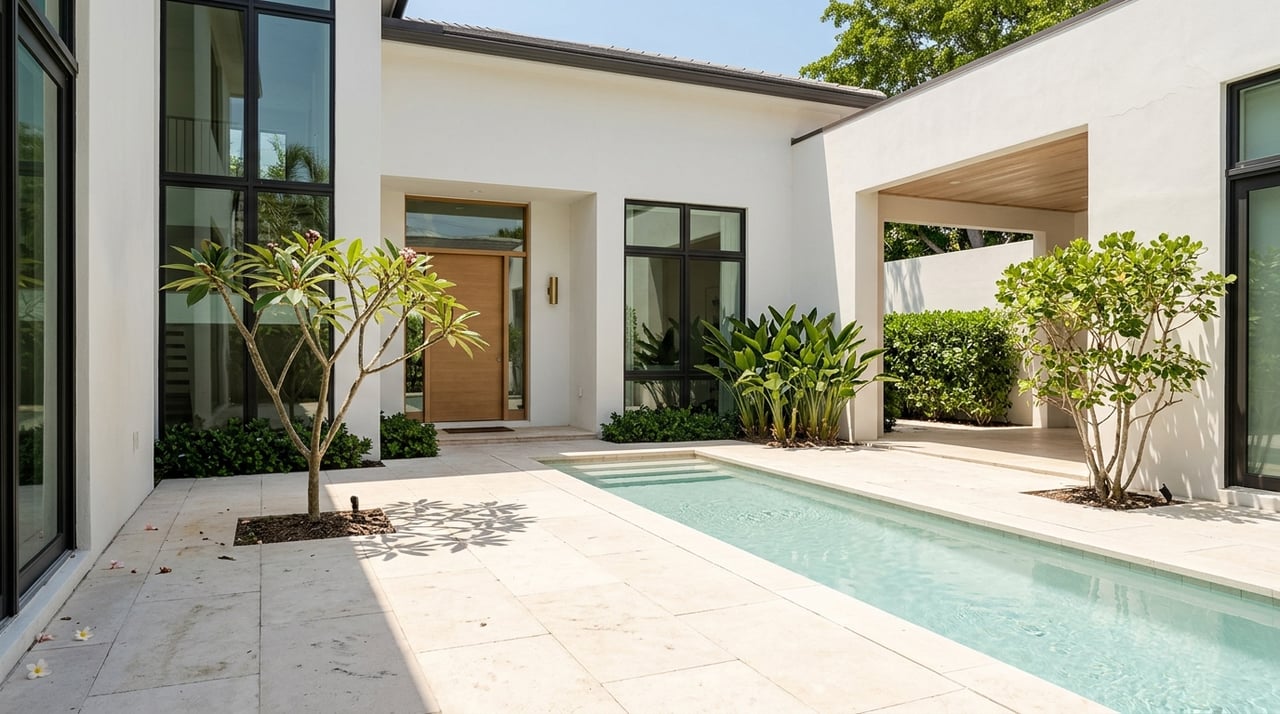
Big life changes often start with a simple question: Do you need more home, or less to manage? In Coral Gables, that decision can feel especially complex because the market is high-value, the housing stock is varied, and the financial details go well beyond square footage. Whether you are thinking about a larger home for your next chapter or a lower-maintenance property that better fits your lifestyle, understanding the local factors can help you move with clarity. Let’s dive in.
Why this choice matters in Coral Gables
Coral Gables is a premium ownership market with a strong base of long-term homeowners. According to U.S. Census QuickFacts for Coral Gables, 64.5% of homes are owner-occupied, the median owner-occupied home value is $1,089,900, and median monthly owner costs exceed $4,000 with a mortgage.
That matters because your next move here is not just about buying a different home. It is also about how your monthly costs, maintenance load, tax picture, and day-to-day lifestyle may change after the move.
The city’s demographics also help explain why both move-up and downsizing decisions are common. Census data shows an average household size of 2.28 people, and 18.9% of residents are 65 or older. The city’s Community Recreation Master Plan also notes that family households without children under 18 and non-family households make up a large share of local households.
Coral Gables market conditions to know
If you assume every desirable Coral Gables home sells instantly, the data suggests a more nuanced picture. Recent reports point to a premium market that may offer room for negotiation, depending on the property and price point.
Redfin’s Coral Gables housing market page reported a February 2026 median sale price of $1,522,500, average time on market of 113 days, and described the area as not very competitive. Realtor.com’s Coral Gables overview reported a March 2026 median listing price of $1,989,000, 506 active listings, 71 median days on market, a 95% sale-to-list ratio, and characterized the city as a buyer’s market.
These sources use different methods, so the figures are not directly interchangeable. Still, they point to the same practical takeaway: if you are moving up or downsizing in Coral Gables, pricing strategy and negotiation matter.
What moving up can look like
If you are moving up, you may be looking for more interior space, a larger lot, more privacy, or a home that better supports entertaining, remote work, or multigenerational living. In Coral Gables, that often means comparing different housing forms rather than only looking for a bigger version of your current home.
The city’s land use framework allows for single-family, duplex, and multi-family housing. It also includes higher-density single-family options such as townhouses, patio homes, cluster homes, and zero-lot-line homes, according to the city’s Comprehensive Land Use Plan.
That means a move-up decision may involve choices like:
- A larger detached home
- A property with more outdoor space
- A townhouse with more usable square footage but less yard maintenance
- A different layout that fits how you live now
In other words, moving up does not always mean buying the biggest house possible. It can mean finding a property that gives you better function, better flow, and a better fit for your next stage.
What downsizing can look like
Downsizing in Coral Gables is not necessarily about compromise. For many homeowners, it is about simplifying ownership, reducing upkeep, and aligning housing costs with current priorities.
Because Coral Gables includes condos, townhomes, and other lower-maintenance housing types, you may have more than one way to right-size. Realtor.com’s local market overview includes examples of both single-family communities and condo properties such as 55 Merrick Condominiums and University Inn Condominium, showing that the city offers more than one ownership path.
A downsizing move may make sense if you want:
- Less maintenance
- Fewer unused rooms
- A different lock-and-leave lifestyle
- Lower carrying costs, depending on the next property
- A home that better matches your current household size
The key is to compare the full ownership picture, not just the sale price. A smaller home can still come with higher taxes, association costs, or insurance obligations depending on what you buy.
Historic homes add another layer
Coral Gables has a distinct architectural identity, and that is part of its appeal. The city’s Historic Villages resources highlight clusters such as Chinese Village, French Normandy Village, Florida Pioneer Village/Colonial Village, French Country Village, French City Village, and Italian Village, with some homes dating to 1925 through 1927.
If your next move involves an older or historically significant property, it is smart to understand the review process before you buy. The city notes that Historic Preservation staff review Certificates of Appropriateness and related matters, and the Board of Architects emphasizes design consistency, traditional aesthetics, and tree-related requirements for certain applications and demolition permits.
That does not mean these homes are harder to love. It means your renovation, expansion, or maintenance plans may take more time and planning than they would in a typical suburban market.
The biggest financial filters
For most homeowners, the move-up or downsize decision becomes clearer once the numbers are laid out. In Coral Gables, three issues often matter most: equity, taxes, and carrying costs.
Understand your homestead benefits
Florida homeowners may benefit from the homestead exemption, which the Florida Department of Revenue says can reduce taxable value by as much as $50,000. The state also notes that some homeowners may be able to transfer all or part of their Save Our Homes assessment difference to a new Florida homestead.
If you are selling one home and buying another, that portability piece can be a major planning tool. It can affect how affordable your next monthly ownership costs feel after closing.
Know how portability works in Miami-Dade
Miami-Dade says portability allows owners to transfer the assessment difference up to $500,000. The new homestead must be established within three years of the prior one, and the application deadline is March 1.
There is an important detail many homeowners miss: downsizing does not automatically mean you will carry over the full prior benefit. The county explains that the transferred amount may be prorated based on the relationship between the old home’s market value and its Save Our Homes difference.
Plan for a tax reset after purchase
Miami-Dade also warns that property taxes may change significantly after a sale. A change in ownership can reset assessed value to full market value, and non-ad valorem assessments can also affect the final bill.
This is one of the biggest reasons homeowners feel surprised after moving. A home that looks manageable on the purchase price alone may feel very different once updated taxes and recurring costs are factored in.
Be careful if you plan to rent first
Some owners consider renting out the current homestead while they search for the next property. Before doing that, review the rules closely. Miami-Dade notes that renting your homestead property may increase property taxes and may jeopardize the homestead benefit.
Timing matters here. The gap between selling, buying, moving, and possibly renting can affect more than convenience.
Questions to ask before you decide
A smart Coral Gables move usually starts with a few focused conversations. Before you commit to moving up or downsizing, consider asking:
- How much equity do you want to unlock, preserve, or reinvest?
- What will the new tax bill likely be after reassessment?
- How much Save Our Homes benefit can you actually port?
- Will the next property qualify for homestead exemption or other exemptions?
- Do you want a detached home, or would a condo or townhome better fit your lifestyle?
- Are you comfortable with the maintenance needs of an older property?
- Is the home in a historic area or subject to additional review requirements?
These are not just technical questions. They help you define what a successful move looks like for you.
How to tell which path fits you
If you are unsure which direction makes the most sense, start with your daily life instead of the listing photos. Think about how you use your home now, what feels easy, and what feels heavier than it used to.
You may be ready to move up if:
- You need more functional space
- Your current layout no longer supports your routine
- You want more privacy or outdoor living space
- You are comfortable with potentially higher carrying costs
You may be ready to downsize if:
- Large parts of your home go unused
- Maintenance feels like a burden
- You want simpler ownership
- You would rather redirect equity toward other goals
In Coral Gables, either move can be the right one. The best choice is the one that supports your finances, your lifestyle, and your next chapter with the least amount of friction.
A practical way forward
In a market like Coral Gables, your next step deserves more than a quick online estimate or a guess about taxes. You need a strategy that looks at pricing, property type, carrying costs, and local regulations together.
That is where a relationship-first advisor can make the process feel more manageable. If you are weighing whether to move up or downsize in Coral Gables, Vella Real Estate can help you think through the decision with a clear, concierge-style approach tailored to your goals.
FAQs
What does moving up in Coral Gables usually mean?
- In Coral Gables, moving up often means seeking more functional space, a larger detached home, more outdoor area, or a different property type such as a townhouse that better fits your current lifestyle.
What does downsizing in Coral Gables usually involve?
- Downsizing in Coral Gables often means comparing smaller single-family homes, condos, or townhomes with the goal of reducing maintenance, adjusting carrying costs, or matching your home to a smaller household size.
Are Coral Gables homes always selling quickly?
- No. Recent data from Redfin and Realtor.com suggests Coral Gables is a premium market, but not an especially fast-moving one, with meaningful days on market and conditions that may allow negotiation.
How does property tax portability work for Miami-Dade homeowners?
- Miami-Dade says portability may allow you to transfer up to $500,000 of Save Our Homes assessment difference to a new Florida homestead, subject to timing rules, eligibility requirements, and possible proration.
Can property taxes increase after buying a new home in Coral Gables?
- Yes. Miami-Dade warns that a change in ownership may reset the assessed value to full market value, which can increase the tax bill, and non-ad valorem assessments may also affect total costs.
Do historic homes in Coral Gables come with extra considerations?
- Yes. Some older or historically significant Coral Gables properties may be subject to preservation review, design standards, tree-related requirements, or Certificate of Appropriateness processes that can affect renovation plans.
Is downsizing in Coral Gables always cheaper than moving up?
- Not always. A smaller home may still carry meaningful ownership costs depending on taxes, association fees, insurance, and the amount of portability benefit that transfers to the next property.
