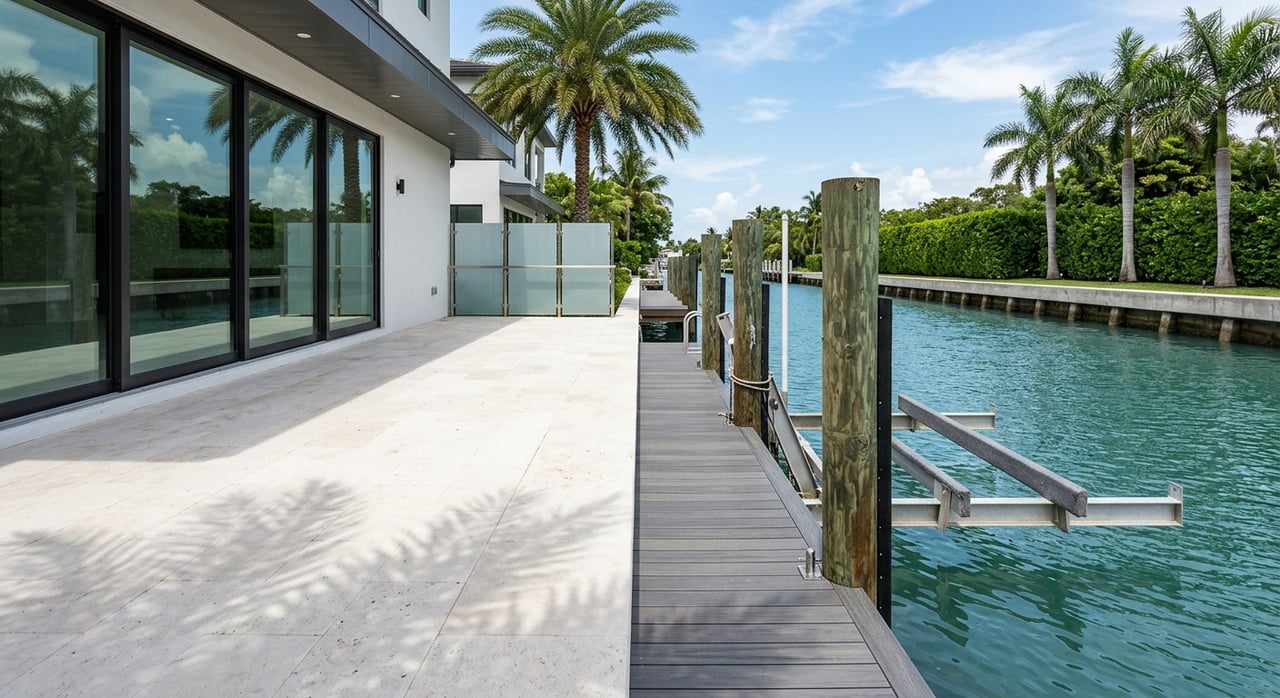
If you are shopping for a canal-front home in Eastern Shores, the view is only the beginning. In this neighborhood, two homes can both be on the water and still offer very different boating access, dock options, and day-to-day livability. If you want to make a smart choice, you need to look past the listing photos and focus on how the property actually works for your lifestyle. Let’s dive in.
Why Eastern Shores Feels Different
Eastern Shores is a 322-acre peninsula neighborhood in the City of North Miami Beach. According to Miami-Dade planning research, it is bordered by NE 171st Street and the Intracoastal Waterway to the north, NE 163rd Street to the south, Maule Lake to the west, and the Intracoastal Waterway to the east.
That setting shapes the entire buying experience. The neighborhood includes man-made canals throughout most of the community, with condos and townhomes more common on the eastern side and single-family homes often enjoying direct water frontage. In practical terms, that means you are not choosing from one type of waterfront property. You are choosing from several different waterfront experiences.
Compare Canal Types First
One of the most important things to understand is that Eastern Shores offers more than one canal setting. Some homes sit on narrower residential canals, some are positioned on wider intersecting waterways, and some are closer to Maule Lake, where the water can feel more open.
This matters because canal width affects how the property lives on the water. A narrower canal may still be a great fit for your boat and budget, but a wider canal or a Maule Lake-adjacent setting may offer a more open feel and easier maneuvering.
Canal Width and Frontage Are Different
Buyers often treat all waterfront features as one category, but that can lead to mistakes. In Eastern Shores, canal width and frontage answer two separate questions.
Canal width affects turning room, navigation comfort, and how open the view feels. Frontage affects how much dock space, lift capacity, or outdoor setup the lot may support. A property can sit on a wider canal but have less usable dock frontage than another home on a narrower stretch.
Public listing examples in the neighborhood often use labels like Canal Width 1-80 Feet and Canal Width 81-120 Feet. While those are listing fields rather than surveyed measurements, they can still help you sort options early in your search.
Maule Lake Offers a Different Boating Feel
If boating is central to your decision, Maule Lake deserves special attention. NOAA reports that Maule Lake is entered through a privately marked channel from Biscayne Creek, with a reported controlling depth of 12 feet in that channel, while lake depths were reported from 2.5 to 17 feet over rocky bottom.
That does not mean every nearby home has the same exact water conditions, but it does show why some Eastern Shores properties feel very different from a typical interior canal home. For some buyers, that added sense of open water is a major advantage.
Plan for Your Boat Route
A canal-front home is only as useful as the route your boat can actually take. In Eastern Shores, route planning is not a detail to save for later. It should be part of your decision before you go under contract.
The key issue is not just whether the home has a dock. It is whether your boat can comfortably and consistently get from that dock to the waterway you plan to use.
Know the NE 163rd Street Drawbridge
For many Eastern Shores boaters, the NE 163rd Street drawbridge is a major factor. NOAA identifies this bridge at Mile 1078.0 and reports a 30-foot bascule-span clearance. It opens on signal, but during certain daytime periods on weekdays, weekends, and federal holidays, openings are limited to the quarter-hour and three-quarter hour.
If your boat has more vertical height, this becomes part of your lifestyle, not just a technical note. You will want to think about whether that bridge routine fits how and when you like to go out on the water.
Fixed Bridges and Slow Zones Matter Too
NOAA also notes that Oleta River leads westward from Biscayne Creek into Maule Lake and that two fixed highway bridges cross the river upstream from the entrance. In addition, Miami-Dade boating restriction materials identify idle/no-wake or exclusion areas around Little Maule Lake, the Oleta River, Upper Oleta River, and the Haulover and Sunny Isles Beach zone.
That means two homes that look similar on a map can create very different boating routines. A route with more bridge limitations or more speed-restricted sections may feel much less convenient over time.
Look Closely at Dock Setup
In Eastern Shores, not all docks are created equal. The right dock for you depends on your current boat, your next boat, and whether you want a simple tie-up or a more customized setup.
Public listing examples in the neighborhood show a wide range. You may find common dock space for boats up to 30 feet, 32-foot private deeded docks, 40-foot dock spaces, 80-foot private docks, 90 linear feet along a bulkhead seawall, or homes with 100 feet of waterfront and a boat lift.
Ask These Dock Questions
Before you fall in love with a property, compare the dock details with the same care you would give the house itself. A short checklist can save you time and frustration.
- Is the dock private, deeded, shared, or common-use?
- How much linear footage is available?
- Is there a boat lift already in place?
- Does the setup work for your current vessel?
- Could it work for a future vessel if your needs change?
- Is the waterfront edge a bulkhead seawall or another configuration?
These answers can shape both convenience and long-term flexibility.
Permit History Matters
The existing dock is only part of the picture. If you may want to repair, replace, or modify it later, the permit path matters too.
The City of North Miami Beach states that building permits are required for docks, and its building department handles permit applications and code enforcement. Florida DEP also notes that certain single-family dock projects may qualify for a self-certification process, including a new dock, repair or replacement of an existing dock, or the addition of a boat lift to an existing dock.
For you as a buyer, that means it is wise to look at both what is there now and what may be possible later.
Prioritize a Layout That Supports Waterfront Living
A canal-front home should work well both on and off the water. In Eastern Shores, the most appealing property on paper is not always the one that feels easiest to live in every day.
That is especially true if you plan to entertain often, host family, or want a home that feels comfortable for different stages of life. A strong floor plan can make a waterfront property much more usable.
Main-Level Living Can Add Flexibility
Housing research supports layouts that reduce stair dependence and create better separation between private and shared spaces. The Census Bureau reported that multigenerational households accounted for 4.7% of all U.S. households and 7.2% of family households in 2020. AARP guidance highlights the value of having a bedroom, kitchen, full bathroom, and laundry on one level when possible, and HUD notes that first-floor bedrooms can help address accessibility challenges in multilevel homes.
In Eastern Shores listings, that translates into practical features like a ground-level bedroom and bath, a one-story single-family home with a private dock, or a townhouse with a private elevator and en-suite bedrooms. These are not just luxury details. They can make the home easier to use for guests, relatives, and everyday routines.
Match the Floor Plan to Your Routine
If you love boating, think about how the home functions from dock to kitchen, from outdoor storage to shower, and from guest space to main living areas. The right layout often makes waterfront ownership feel simpler.
Features worth noticing include:
- A main-level guest suite or flex room
- Fewer stairs or elevator access
- Easy movement between the dock and living areas
- Practical space for gear, groceries, and entertaining
- Clear separation between private bedrooms and gathering spaces
A beautiful canal-front address feels even better when the floor plan supports how you actually live.
Focus on Fit, Not Just Waterfront Status
The strongest Eastern Shores purchase is usually the one where several pieces line up at once. Your boat, the canal type, the bridge profile, the dock arrangement, and the house layout all need to work together.
A smaller boat may be perfectly well matched to an interior canal home with a modest dock. A larger vessel, or one with more vertical clearance needs, may be better suited to a location and route that make bridge timing easier to manage. In the same way, a striking multilevel home may not be the best choice if you expect frequent guests or want easier long-term accessibility.
That is the real lesson in Eastern Shores. Waterfront functionality matters just as much as waterfront appeal.
If you are comparing canal-front homes in Eastern Shores, a local, detail-focused approach can make all the difference. The right property is not just the one that looks best online. It is the one that supports your boating routine, your household needs, and the way you want to enjoy Miami waterfront living. When you are ready for tailored guidance, Vella Real Estate can help you evaluate the details with clarity and confidence.
FAQs
What should you check first when buying a canal-front home in Eastern Shores?
- Start with canal type, dock setup, and boat route. In Eastern Shores, waterfront homes can vary widely in canal width, frontage, and boating convenience.
How important is canal width for an Eastern Shores waterfront home?
- Canal width can affect maneuvering room and how open the water feels, while frontage affects how much dock or lift area a property may support.
Why does the NE 163rd Street bridge matter for Eastern Shores buyers?
- NOAA reports that this drawbridge has a 30-foot bascule-span clearance and follows opening timing rules during certain daytime periods, which can affect boating schedules.
Are dock permits required for waterfront homes in Eastern Shores?
- Yes. The City of North Miami Beach says building permits are required for docks, and permit history can be important if you plan future repairs or modifications.
What home layout works best for an Eastern Shores canal-front property?
- Many buyers benefit from layouts with easy dock access, a main-level bedroom and bath, and reduced stair dependence or elevator access for added flexibility.
